The Double Edged Sword of Digital Transformation.
Today I got my first online lecture from Stockholm University.
The company I work for was more than happy to lend me a corner in the parcel reception room to follow the online lecture, which was quite the funny experience. As I had my laptop speakers on full blast, the sound was somewhat echoing in the surrounding hallways. Colleagues rarely walk around there and the ones who did, got a bit spooked by the voice of the lecturer coming from the hallways, probably thinking “Is the room talking?” I resolved this amusing confusion by just shouting “Hey, it’s just me in here! I’m attending a lecture!” and everybody was relieved that their senses weren’t betraying them on thinking that the parcel room walls were verbally expressing their views on certain topics. In English.
Anyway, the lecture was rather interesting as it dealt with how Digital Transformation affects society. There were a couple of key terms mentioned in the course literature books, which I’ve seen in articles and reports I read in the past. They are digitization, digitalization and digital transformation.
Every time I read these words, especially the first two, I thought they meant the same thing.
Namely, the conversion of analog information into digital information. I always thought that these words were used interchangeably by the author of the article or report due to a specific nomenclature unbeknownst to me, or some other local linguistic colloquialisms. The co-lecturer also asked us students as well whether we knew about these words, because it so happens that they do not mean the same thing and that there’s a key difference between all three of them.
In short, what I understood from the lecture is that digitization is the process of changing analog information to digital information so that they can be processed by a computer or other digital electronic devices. Digitalization is the process of changing any given set of manual tasks into tasks that are still done by humans but the data retention and processing part is partially or completely digital, meaning, being managed by a computer system. Digital transformation refers to the unsuspecting obsolescence of certain long-standing ways of doing things due to new ways invented for doing the same things, typically involving a digital device or infrastructure.
Digital transformation brought many new possibilities in our modern lives. For example, renting a movie without ever going to a video store. Playing your favorite songs without ever buying a CD or visiting a new country without ever staying exclusively at a hotel chain or motel. It created so much more flexibility for consumers but it also made all kinds of jobs obsolete in the process.
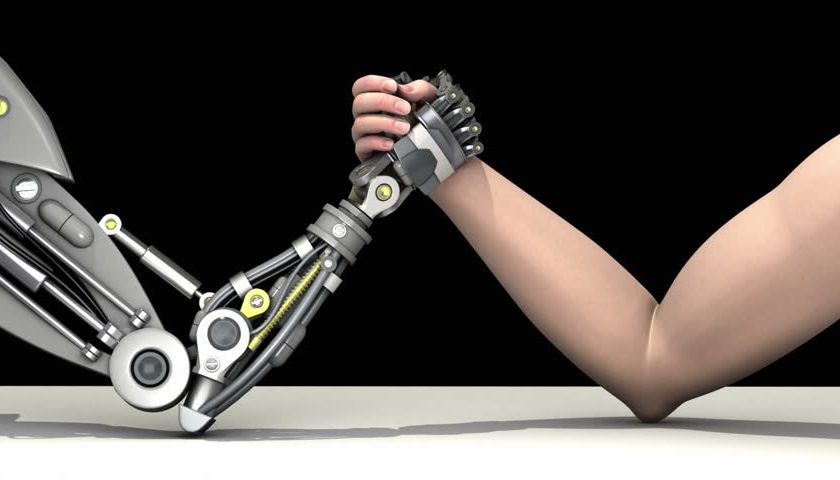
From then on, the lecture took a direction towards some of the more negative aspects of digital transformation. Mainly the unfortunate fact that many people in many sectors will lose their jobs and that not everybody will have the capacity to change their skill sets in time to overcome job redundancy due to digital transformation. However, one student expressed a rather interesting view: “We must accept that there will be winners and losers, while still recognizing that digital transformation is good for us”.
That was for me the key takeaway from this entire lecture. To quote the lecturer. “IT has a massive societal role”. We as IT professionals need to challenge our believes about digital transformations going on around us and make sure we keep markets competitive, while at the same time allow room for fairness, democracy and no discrimination, to name a few. And of course, actively do something about it to help, not only ourselves with dealing with digital transformation but also, but to embrace digital transformation. To be part of it, instead of dreading the unfortunate consequences it sometimes brings with it, and, not doing anything about it.